

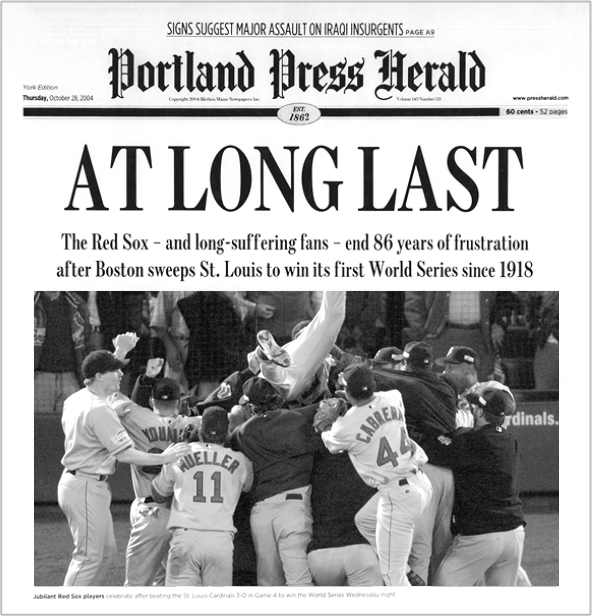
Local newspapers are as central to New England as the Red Sox.
With every local newspaper lost, New England loses connection, community, and a piece of history.
In New England, newspapers are closing fast.
From Providence to Brockton to York, the information sector has experienced “significant downsizing” across the region. Massachusetts leads the country with the highest number of private equity and investment-company-owned papers; Gannett News alone has closed 20 weekly newspapers in the state, and consolidated the remainder in Massachusetts into a “a small number of digital media outlets.
No sector of the regional economy has lost more jobs.
Connecticut and Massachusetts
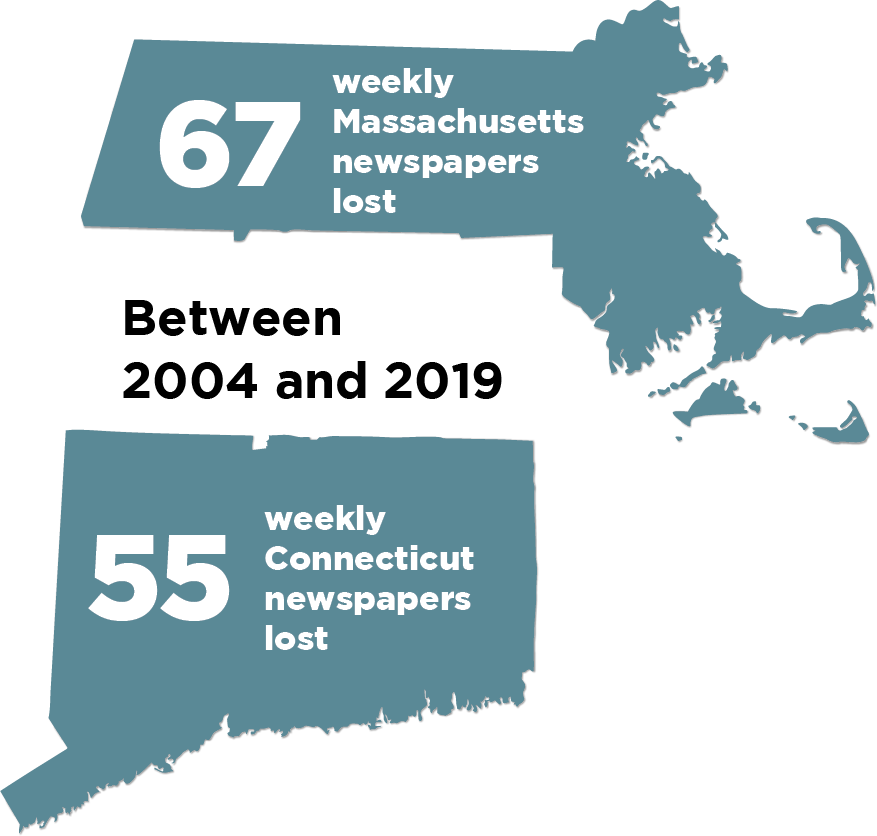
Fifty-five weeklies in Connecticut and 67 in Massachusetts closed between 2004 and 2019. Others have reduced the number of days they publish, laid off staff, outsourced content, or gone partly or fully digital. Maine, Vermont, New Hampshire - all are losing newspapers, and circulation. One stark example is the once-vaunted Providence Journal, which has seen its weekly circulation decline from 164,000 in 2005, to under 20,000 today; and Sunday has declined from 231,000 in 2005 to 24,417 today.
Maine
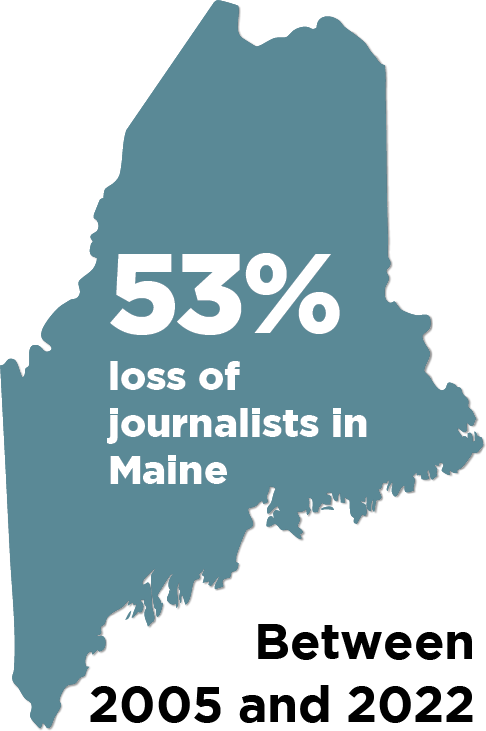
In Maine, reported circulation for daily and weekend papers has fallen over 50%. From 2005 - 2022, the number of journalists in Maine has fallen by 53% as newspapers consolidate and cut staff to support profits. And it's not just Gannett: GateHouse Media, a huge chain which owns more than 100 dailies and more than 600 other community publications (including the York County Coast Star and York Weekly) has cut staff, reduced coverage, consolidated functions and created content farms out of local news sites.
“Our work with JNE has helped our newsroom set goals for the future, Our work with JNE has helped us build capacity (editorial or business capacity).”

New Hampshire
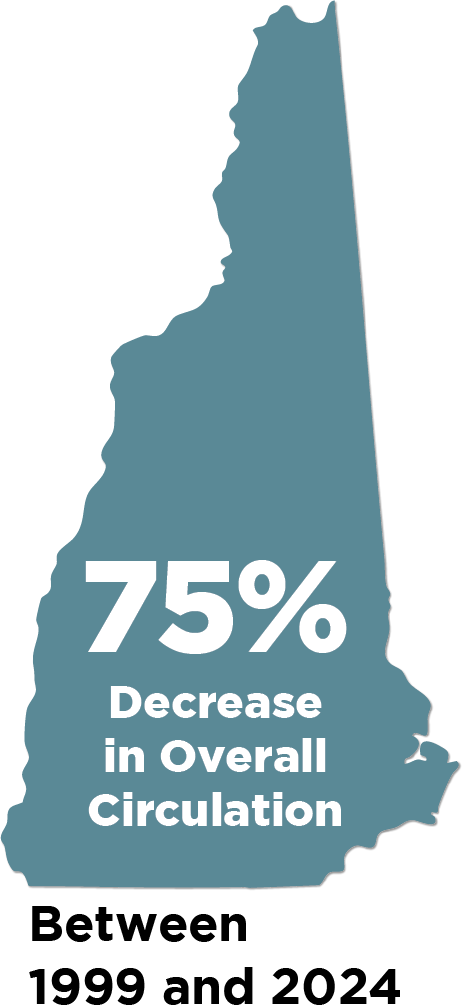

Sunday circulation of the Union Leader, the largest newspaper in NH, has fallen from 85 thousand in 1999 to 20 thousand today. Weekday circulation has fallen from 63 thousand to under 16 thousand.
Rhode Island
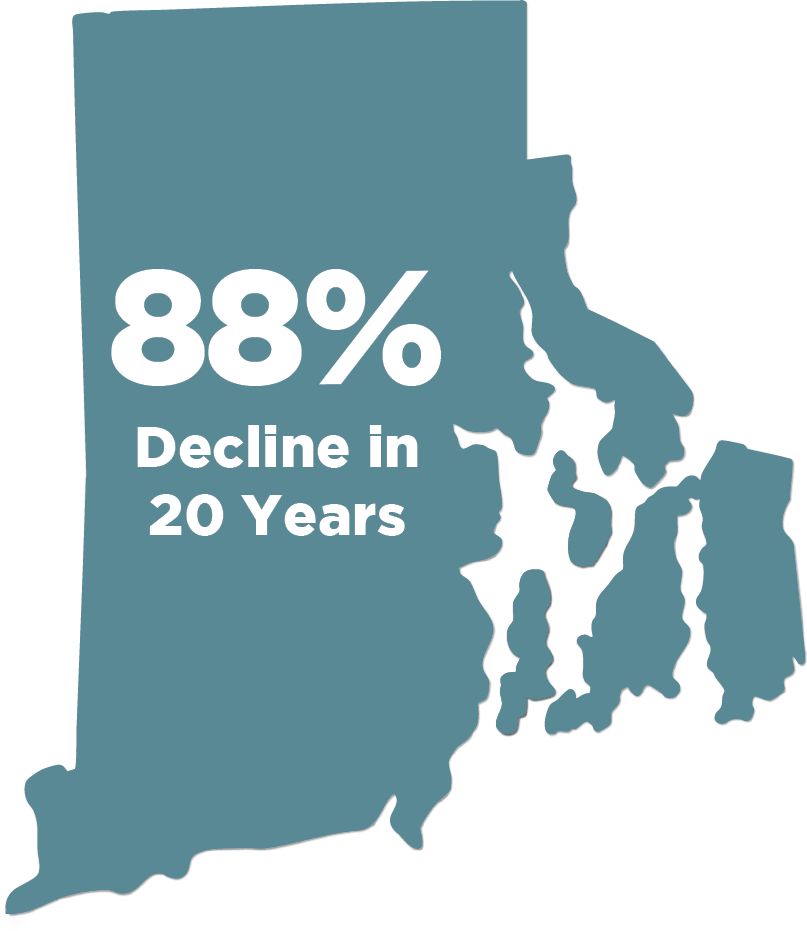
In less than 20 years, the Providence Journal’s weekday papers have declined by 88%. On Sundays, that drop off has been 89%. In 2005, circulation was 164,000 on weekdays and over 231,000 on Sundays.

Vermont
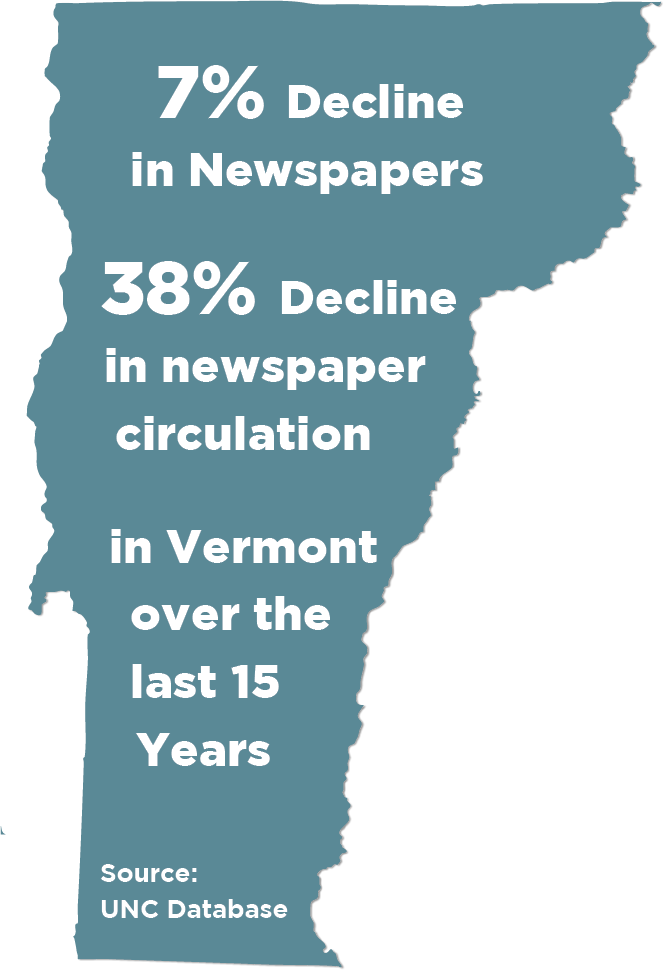
Between 2004 and 2019 newspapers declined by 7% and circulation in Vermont dropped by 38%.
Local news delivers a shared set of facts.
Who the star forward is; who made it into the National Honor Society; what restaurant is opening; the upcoming hearing on a proposed affordable housing development. These facts are our connection points - the kinds of information a community needs and rallies around. As newspapers are shuttered, we are losing that connection.